

Quality problems in cross-border sourcing rarely appear out of nowhere. In our experience, most of them can be traced back to a checkpoint that was skipped: a specification that was never written down, a sample that was approved by photo only, or an inspection booked after the goods were already sealed in cartons. Quality control is not a single event at the end of production. It is a chain of small, unglamorous checks, and the chain is only as strong as its earliest link. This checklist walks through the sequence we apply to orders placed with Chinese suppliers, from supplier verification to the moment the container doors close.
1. Before You Order: Verify the Supplier, Not Just the Price
A low quotation tells you almost nothing about whether the order will ship on spec. Before discussing price in detail, verify the basics:
- Business registration. Ask for the business license and check that the company name on it matches the name on the proforma invoice and the bank account you will pay. Mismatches are a red flag that deserves an explanation.
- Factory or trading company? Both can be legitimate partners, but you should know which one you are dealing with. A simple test: ask who will handle quality issues if the goods fail inspection, and how.
- Export experience. A supplier that regularly ships to your market will already understand its labeling, packaging, and documentation requirements. Ask which markets they export to and what documentation they usually provide.
- See the operation. A video call with a walkthrough of the workshop or warehouse reveals more than a polished company brochure. You are looking at scale, organisation, and whether the products on the floor resemble what is being quoted.
- Payment terms. Treat requests for full prepayment to an unverified supplier with caution. Staged payments — a deposit, with the balance tied to a passed inspection — are a common structure for good reason.
2. Samples: Lock the Standard Before Production Money Moves
Every dispute about finished goods eventually becomes a dispute about what was agreed. The sample stage is where you remove that ambiguity.
Approve a physical sample, not photographs. Then write down the specification the sample represents: materials and grades, dimensions and tolerances, colours referenced to a standard such as Pantone where colour matters, surface finish, function, and any parts or accessories included. Both sides keep a sealed reference sample — one at the factory, one on your side — so that "different from the sample" can be checked against an object rather than argued from memory.
Pay attention to what the sample does not show. A hand-finished sample proves the supplier can make the product; it does not prove the production line will make ten thousand of them the same way. That is what the later checkpoints are for.
3. During Production: The Mid-Production Check
Most buyers either inspect too early, when nothing is finished, or too late, when everything is packed. The useful moment is in between: once production is underway and the first finished units are coming off the line.
A mid-production check answers three questions. Are the actual raw materials and components the ones specified, or quiet substitutes? Do the first finished units match the sealed sample in dimensions, colour, and function? And is the production pace consistent with the promised delivery date? A systematic error — a wrong colour batch, a substituted component, a misprinted mould — caught at this stage costs a conversation. The same error caught after packing costs a shipment.
4. Before Shipment: Pre-Shipment Inspection and AQL
The pre-shipment inspection (PSI) is the checkpoint most buyers know by name, and it is usually performed using AQL sampling — the Acceptable Quality Limit method standardised in ISO 2859-1 (ANSI/ASQ Z1.4). Instead of opening every carton, the inspector draws a statistically defined sample based on lot size and inspection level, then classifies defects as critical, major, or minor.
Many importers of general consumer goods work with General Inspection Level II and acceptance limits of 0 for critical defects, 2.5 for major defects, and 4.0 for minor defects. Treat these as a widely used starting point, not a universal rule: the right limits depend on your product, your market, and how much risk a defective unit creates. Whatever limits you choose, put them in the purchase order before production starts, so the supplier produces against a known standard.
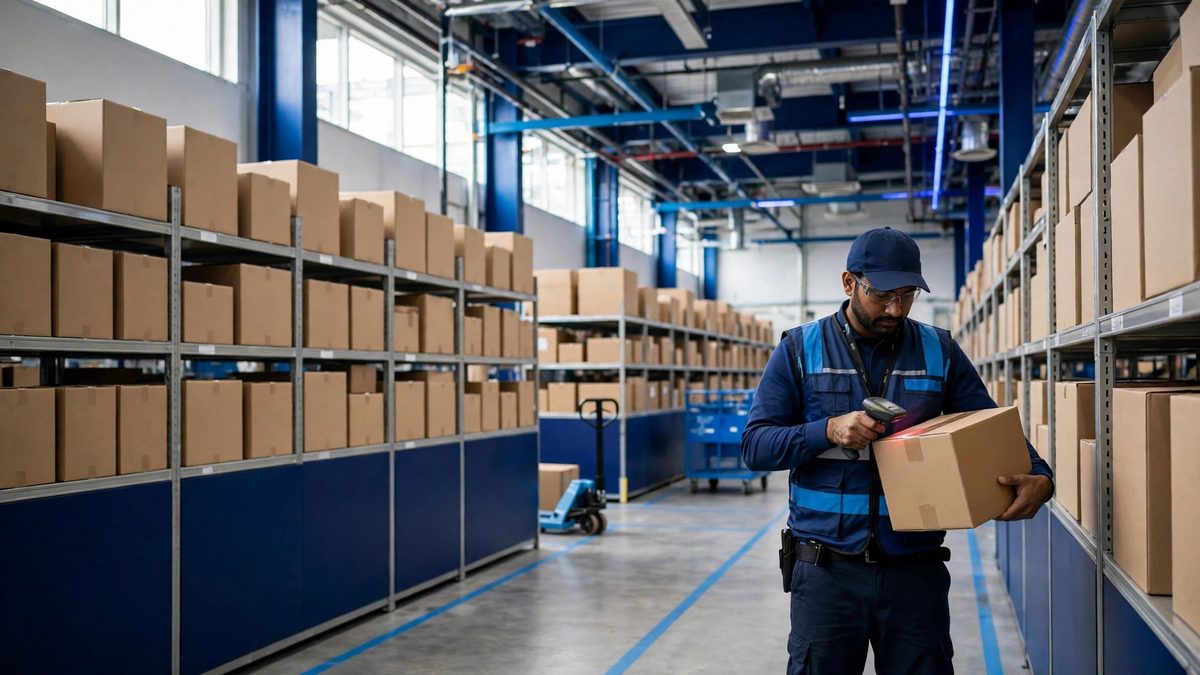
A thorough PSI covers more than defect counting: quantity verification, workmanship and function tests appropriate to the product, measurement checks against the spec sheet, barcode and label scanning, packaging integrity, and a carton drop test to simulate handling in transit.
5. Packaging and Labeling: Where Compliance Actually Fails
A surprising share of sourcing problems are not product problems at all — they are printing problems. Cartons held at destination because the country-of-origin marking was missing, retail packaging whose warning labels do not match the destination market's requirements, barcodes that do not scan.
Check artwork proofs character by character before printing, including the origin marking (goods entering the United States, for example, must be marked with their country of origin), any mandatory warnings for your product category, and net quantity and manufacturer details where required. If the goods are headed to Amazon FBA or a retailer, confirm their current packaging and prep requirements at the time of the order — these change, and last year's spec is not evidence. Finally, verify that what was approved on the proof is what appears on the physical packaging during the PSI, not just on the product.
6. The Pitfalls We See Most Often
- Specification drift. The sample is approved, then materials are quietly adjusted to protect the supplier's margin. Written specs and a mid-production check are the countermeasure.
- Subcontracting. Your order is passed to a smaller workshop you never vetted. Ask directly whether production stays in-house.
- The holiday rush. Orders squeezed in before the Chinese New Year shutdown are produced under time pressure and shipped with skeleton staffing on the other side of the holiday. Build the calendar into your lead time.
- Inspection booked too late. A PSI arranged when goods are already packed can only report; it cannot fix. Book inspections against the production schedule, not the shipping deadline.
- No loading check. Goods that passed inspection can still be damaged by poor container loading. For full-container orders, loading supervision is cheap insurance.
None of these steps is complicated. The discipline is in running all of them, every time, including on the repeat order with the supplier who has never let you down — because that is precisely the order nobody checks.
Planning a first order from China, or trying to fix a recurring quality problem with an existing supplier? This checklist is the framework we start from. If you would like a second pair of eyes on a specification, a supplier shortlist, or an inspection plan, you are welcome to reach out through our contact page — no obligation, and we will tell you plainly if we are not the right fit for the order.